

Whale Sightings
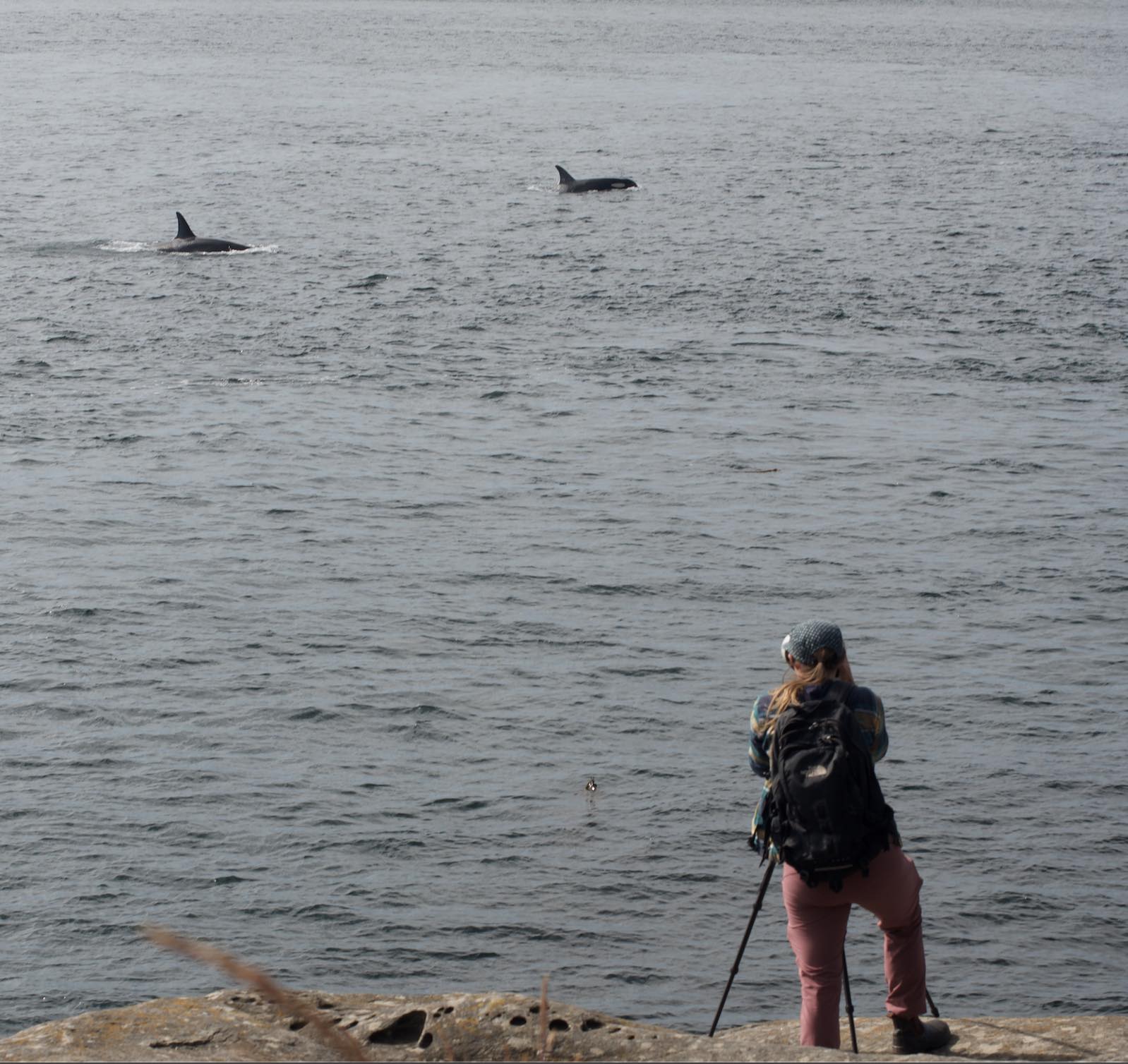
Whale sightings are one of the ways in which we insight into where the whales are located in real time. On the Canadian side of the border, Master’s students from Simon Fraser University have been conducting research on whales in the Southern Gulf Islands and are able to provide whale sightings throughout field seasons over the past several years. These researchers have worked alongside the citizen science group, the Southern Gulf Islands Whale Sightings Network (SGIWSN), made up of over 60 whale sighters located throughout the Southern Gulf Islands.
Whale sightings have long been a subject of fascination and intrigue for both researchers and laypeople alike. These majestic creatures, known for their enormous size and mysterious behavior, have captivated the imagination of countless individuals throughout history. With their distinctive features and unique behaviors, whales offer a compelling window into the natural world and the mysteries that lie beneath the surface of our oceans. Whether you are a seasoned researcher or simply a curious observer, the study of whale sightings is sure to offer a wealth of insights and discoveries.
Whale Forecast System
The study of whale forecast systems has garnered significant interest in recent years, particularly in the realm of marine conservation and management. These highly social marine mammals, often moving in close-knit groups or pods, face significant challenges due to noise and physical disturbances caused by dense shipping traffic in their natural habitats. Therefore, it is of considerable interest to be able to accurately predict their movement. Our project main goal is to ultimately be able to forecast whale locations and alert vessel captains and ports when a whale is forecasted to be entering their path. In this way, risk-reducing measures such as adjusting vessel paths or reducing their speeds can be undertaken, minimizing acoustic disturbances and the risk of vessel collisions.
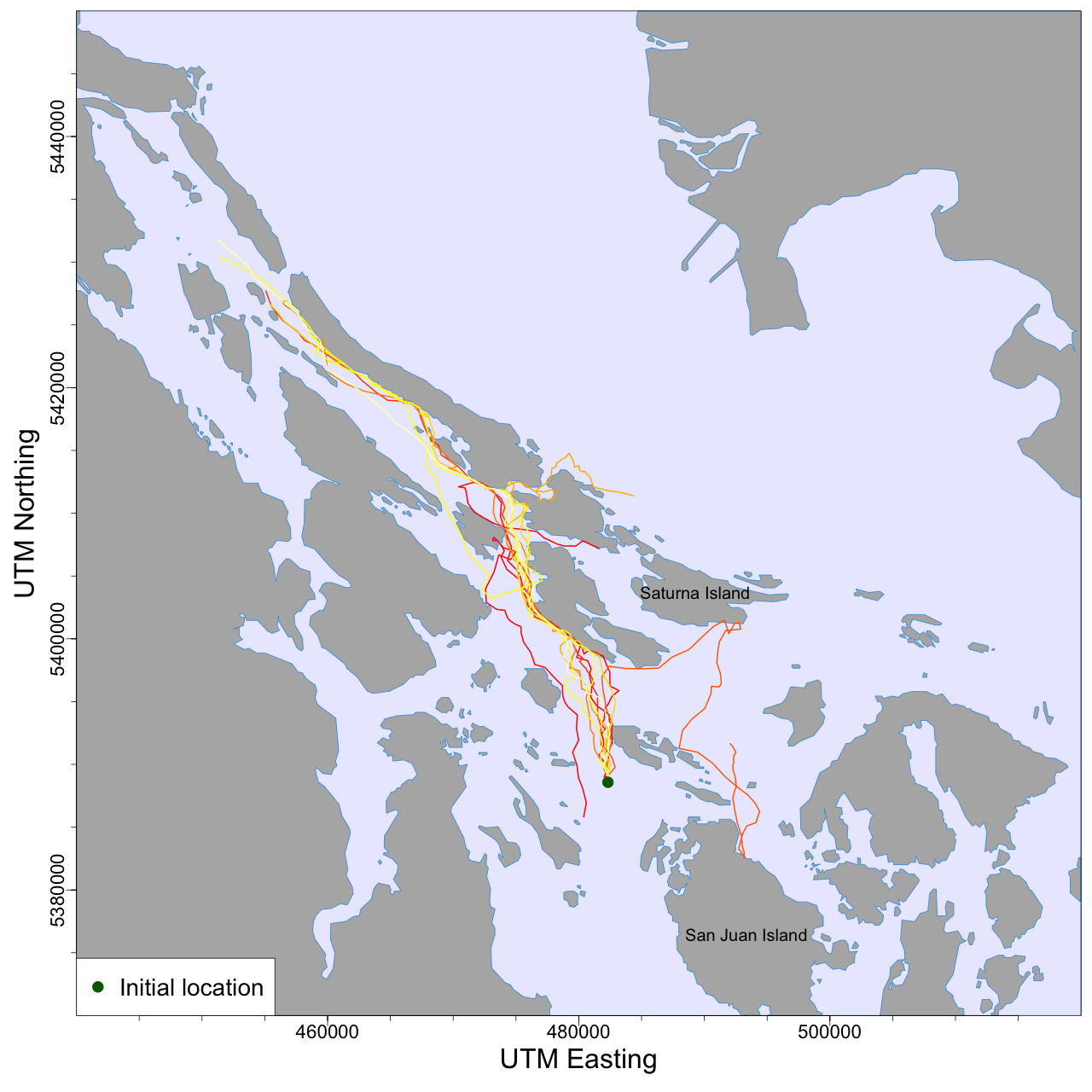
Our project focuses on developing a sophisticated whale forecast system that leverages visual sightings from citizen science groups, automated acoustic detections from hydrophones, and statistical modeling. By analyzing patterns from whale sightings and acoustic detections, the system can simulate realistic trajectories of SRKW pods. This approach allows us to generate predictions about where these whales are likely to be in the near future. By integrating these forecasts into maritime operations, we can significantly reduce the human impact on these creatures and contribute to their conservation.
This forecasting system can also help researchers and policymakers alike make informed decisions for the protection of whale populations and the preservation of their habitats. A model that relies solely on historical sightings of whales was developed as part of a SFU student master’s project, details of which are available in this thesis. You may also find interesting how this trajectory forecast model has helped guide our team on proposing conservation measures in the Tumbo Channel of the Salish Sea, for reducing the impact of vessel noise on this critical SRKW habitat.
Whale Acoustics
Whale acoustics is a fascinating subject that explores the vocalizations and communication methods of these creatures. Whales predominantly use sound to communicate, navigate, and interact with their environment. This acoustical signaling plays a crucial role in their survival, from locating prey to maintaining social connections within pods. Through the study of whale acoustics, we are able to gain a deeper understanding of their behavior, social structures, and even migration patterns. This field of research relies on a growing number of underwater listening devices ranging from stationary hydrophone deployments to autonomous gliders that covers vast areas to capture the sounds produced by whales.
However, the sheer volume of data being collected through these passive acoustic systems easily exceeds the capacity of researchers to manually analyze these recordings for relevant vocalizations. In response to this challenge, recent years have seen a surge in the use of artificial intelligence systems designed to automatically recognize and classify various whale vocalizations from acoustic data. These systems not only have the potential to outperform human analysts in terms of accuracy but also significantly accelerates the analysis process, enabling efficient processing of large volumes of data that would otherwise be unfeasible. As a result, marine researchers can redirect their focus towards more complex aspects of whale behavior, ecosystem dynamics and conservation measures, leaving the labor-intensive and tedious recording analysis to advanced AI tools.
In the HALLO project, our team is interested in developing AI systems powered by deep learning, an advanced subset of machine learning. Deep learning involves the construction and utilization of deep neural networks – complex algorithms that have been outperforming traditional machine learning methods in various fields. These models “learn” a particular task – in our case, identifying whale vocalizations from acoustic recordings – by being exposed to vast amounts of examples (data). In addition, these models can learn and improve over time by seeing new data. This self-improvement characteristic make these algorithms particularly powerful for tasks such as classifying whale sounds in complex and varied acoustic soundscapes.
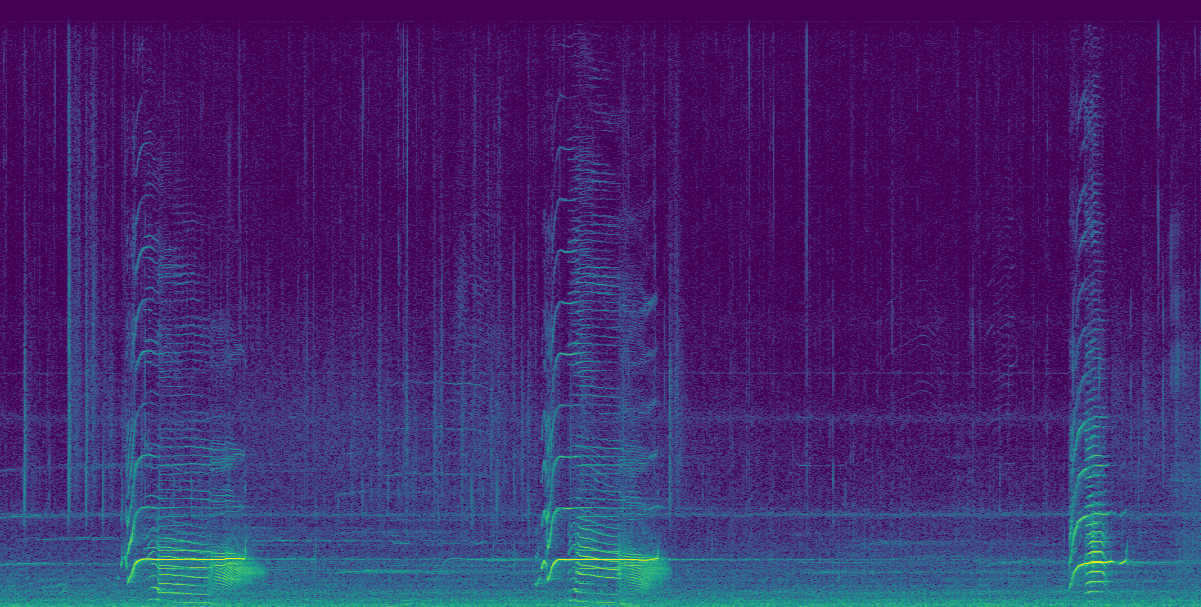
Our team is developing a whale forecasting system that will leverage the acoustic detections made by our deep neural networks to predict the future locations of whales. The aim is to create an effective warning system that helps prevent ships from colliding with endangered orcas off the coast of British Columbia. More details on this whale forecasting system can be found here. Meanwhile, you can explore some of the models our team has developed on the applications page or in our GitHub repository.